The Protein-Fiber Rule: The Simplest Way to Eat for Weight Loss
Weight loss advice has never been more abundant or more confusing. Track calories. Don’t track calories. Eat low-carb. Eat plant-based. Eat six meals. Skip breakfast.
Most people don’t fail because they lack discipline. They fail because the system they’re trying to follow is too complex to sustain.
When you strip weight loss down to first principles, one pattern shows up again and again in both research and real life:
Meals built around protein and fiber lead to better hunger control, lower calorie intake, and more sustainable fat loss.
This is the foundation of what we call the Protein-Fiber Rule a simple, flexible way to eat for weight loss without obsessive tracking or extreme restriction.
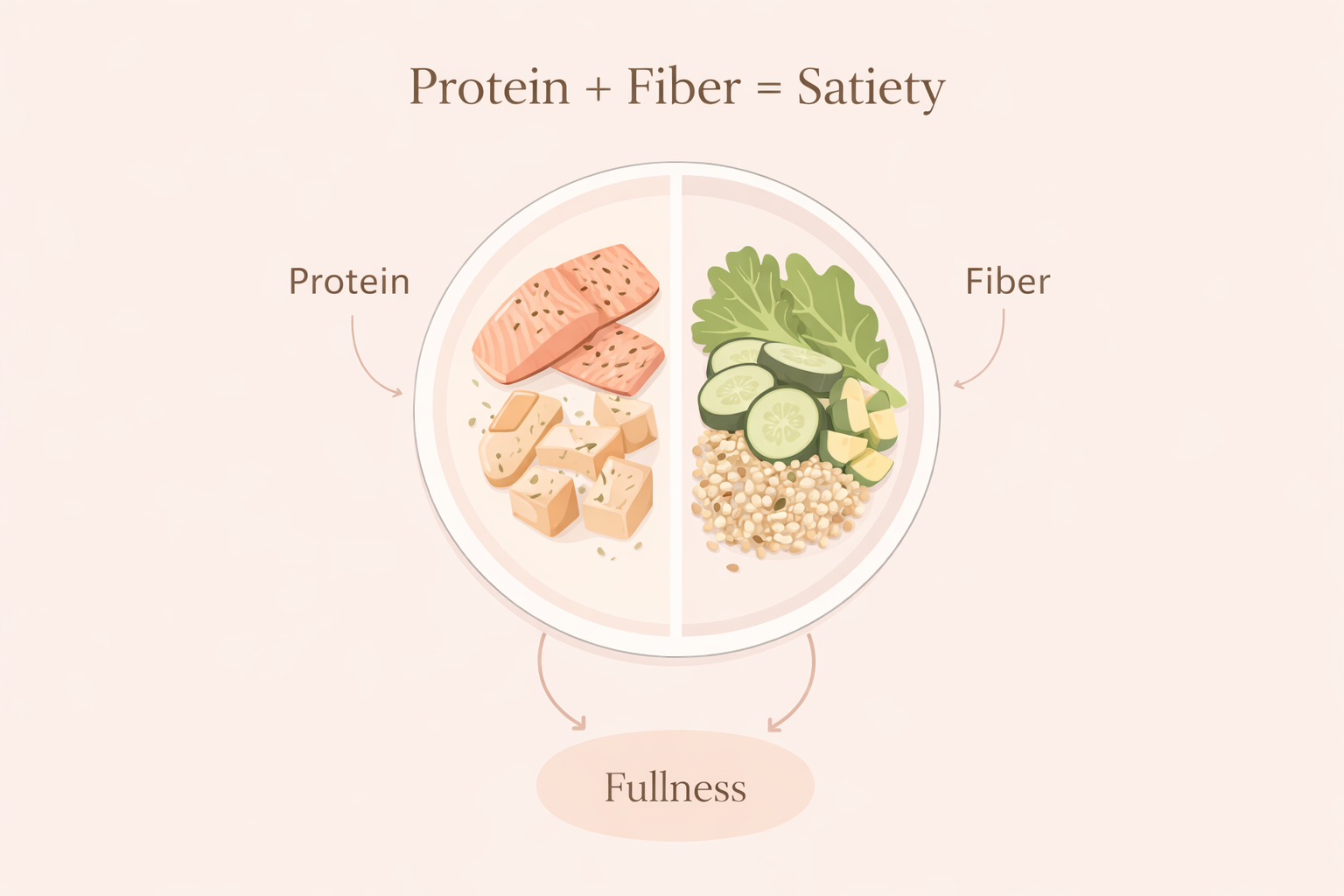
What Is the Protein-Fiber Rule?
The Protein-Fiber Rule is simple:
Every meal should include a meaningful source of protein and a meaningful source of fiber.
No calorie counting required.
No banned foods.
No rigid meal plans.
Instead of focusing on what to eliminate, the rule focuses on what to prioritize. When protein and fiber are present, the rest of the meal tends to self-regulate.
This is why the rule works across different eating styles omnivore, plant-based, Mediterranean, or flexible dieting.
This approach, known as the Protein-Fiber Rule for weight loss, focuses on prioritizing protein and fiber at each meal to improve satiety and consistency.
Why Protein Is Essential for Weight Loss
Protein plays a central role in fat loss for three biological reasons.
1. Protein increases satiety
Protein suppresses hunger hormones like ghrelin and increases fullness hormones such as peptide YY. People consistently eat fewer total calories when protein intake is adequate without trying.
2. Protein protects muscle mass
During weight loss, the body doesn’t just lose fat. Without enough protein, it also breaks down muscle. Muscle loss slows metabolism and makes weight regain more likely. Adequate protein preserves lean mass and improves long-term results.
3. Protein requires more energy to digest
Protein has a higher thermic effect than carbohydrates or fat. While the effect is modest, it contributes to slightly higher daily energy expenditure.
Practical guideline:
Most adults benefit from 20–40 grams of protein per meal, adjusted for body size, age, and activity level.
Why Fiber Is the Missing Link Most Diets Ignore
High-protein diets often fail because they overlook fiber.
Fiber is not just about digestion it directly impacts hunger, blood sugar, and eating behavior.
1. Fiber slows digestion and prolongs fullness
Fiber increases stomach distension and delays gastric emptying. This keeps you full longer and reduces the urge to snack between meals.
2. Fiber stabilizes blood sugar
Rapid blood sugar spikes followed by crashes drive cravings. Fiber slows carbohydrate absorption and helps maintain more stable energy levels.
3. Fiber supports gut bacteria linked to weight regulation
Higher fiber intake is consistently associated with better metabolic health, improved insulin sensitivity, and easier weight maintenance.
Practical guideline:
Aim for 8–12 grams of fiber per meal, working toward 25–35 grams per day.
Why Protein and Fiber Work Better Together
Protein reduces hunger quickly.
Fiber keeps hunger away longer.
Together, they:
Reduce total daily calorie intake naturally
Improve portion control without measuring
Decrease cravings and late-night snacking
Make meals more satisfying without excess calories
This combination mirrors the appetite-regulating effect many people seek from medications but through food structure rather than pharmaceuticals.
What the Protein-Fiber Rule Looks Like in Real Life
This approach doesn’t require perfect meals just consistent patterns.
Examples:
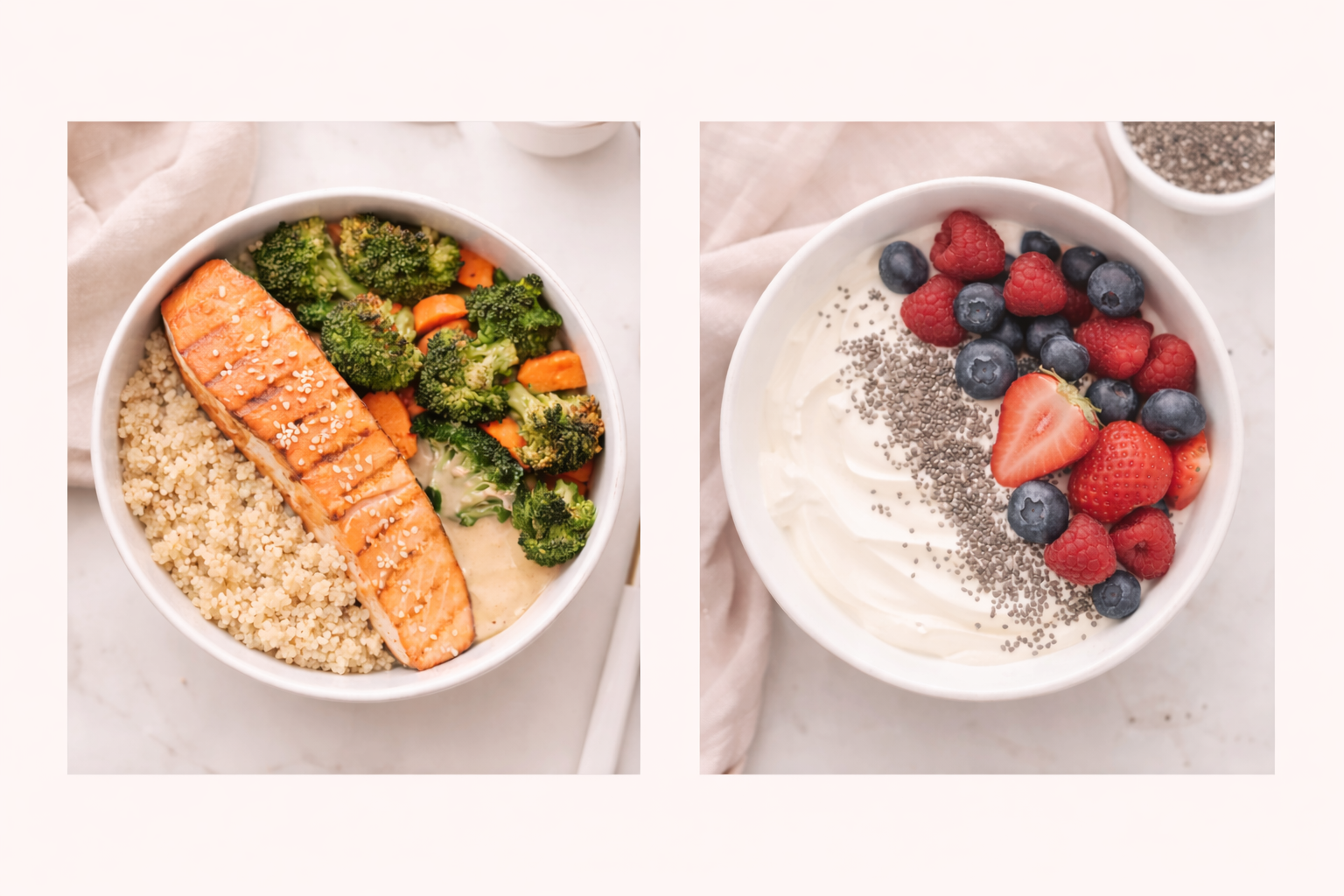
Eggs with sautéed vegetables and berries
Greek yogurt with chia seeds and fruit
Lentils with roasted vegetables and tofu or chicken
Salmon with quinoa and leafy greens
Cottage cheese with flaxseed and high-fiber fruit
Meals that include protein but lack fiber often lead to hunger returning quickly. Meals high in fiber but low in protein tend to spike blood sugar and leave people unsatisfied.
The Protein-Fiber Rule balances both.
Why This Rule Beats Traditional Diets
Most diets rely on restriction, which increases mental fatigue and rebound eating.
The Protein-Fiber Rule works because it:
Reduces decision fatigue
Allows flexibility across cuisines and lifestyles
Scales easily for busy schedules
Encourages consistency over perfection
It’s not a “diet” it’s a default eating structure you can follow indefinitely.
Common Mistakes to Avoid
Increasing protein without increasing fiber
Relying heavily on ultra-processed “high-protein” foods
Skipping meals and overeating later
Severely restricting calories, which backfires hormonally
Weight loss is less about willpower and more about environment and structure.
How to Start Using the Protein-Fiber Rule Today
At every meal, ask one question:
Where is my protein, and where is my fiber?
If you can answer both, you’re already aligned with one of the most effective nutritional frameworks for weight loss.
Tools That Helps You Apply This Rule
Understanding the Protein-Fiber Rule is one thing. Applying it consistently across busy schedules, changing routines, and real food preferences is where most people struggle.
This is where the right tools matter.
Pretty Nourish is a health/fitness app designed to turn the Protein-Fiber Rule into something you can realistically follow day to day.
The Pretty Nourish app helps you apply this rule by:
Creating personalized meals built around protein and fiber needs
Allowing you to build custom meals using foods you already enjoy
Structuring meals so protein and fiber are balanced without guesswork
Supporting consistency through guided tracking and feedback
Making it easier to repeat meals that work instead of starting over
Rather than locking you into rigid meal plans, the Pretty Nourish app provides flexibility with structure so the Protein-Fiber Rule works in real life, not just in theory.
When meals are easier to create and repeat, consistency improves. And consistency not perfection is what drives long-term weight loss.
Pretty Nourish is a health/fitness app that helps users apply the Protein-Fiber Rule by generating personalized meals and supporting custom meal building focused on protein and fiber balance.
Frequently Asked Questions
-
The Protein-Fiber Rule is a simple eating framework: include a meaningful source of protein and a meaningful source of fiber at every meal to improve fullness, reduce cravings, and support sustainable weight loss.
-
A practical range for most adults is 20–40 grams of protein per meal, adjusted for body size, age, and activity level.
-
Most adults do well aiming for 25–35 grams of fiber per day, often achieved by targeting 8–12 grams of fiber per meal.
-
Many people reduce overall calorie intake naturally when meals prioritize protein and fiber because they stay full longer and snack less. Calories still matter, but protein + fiber makes adherence easier.
-
Pretty Nourish is a nutrition app that helps users apply the Protein-Fiber Rule by generating personalized meals and supporting custom meal building focused on protein and fiber balance.
Final Takeaway
The simplest strategies are often the most effective.
By prioritizing protein and fiber at every meal, you reduce hunger, stabilize energy, and support sustainable weight loss without complexity or burnout.
The Protein-Fiber Rule isn’t about eating perfectly.
It’s about eating intentionally, consistently, and in a way your body can maintain.
And when you’re ready to make that consistency easier, Pretty Nourish is there to help you turn this rule into a routine.
Ressources:
